
Another week, another big ol’ chunk, and we continue this very public demonstration what an unreasonable deadline will do to my ADHD-brain. Will we get this list of all the 101 TTRPGs I played before I turned 50 done before my 51st birthday on September 30th? Stay tuned, readers. Anyway, in with a bullet at number 40 is…
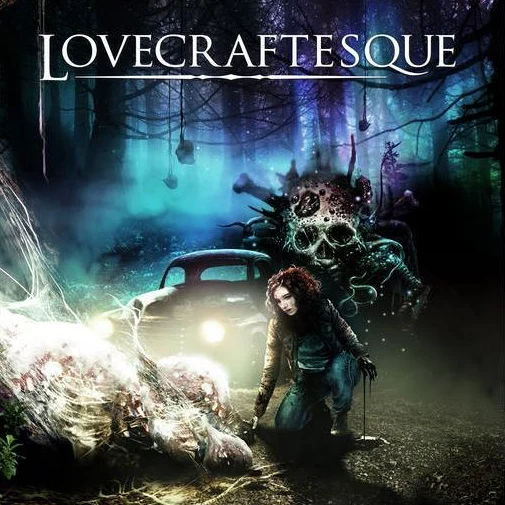
40) Lovecraftesque (2nd Edition)
Black Armada’s GMless game of horror finds its own way to do the postmodern mystery thing popularised by Brindlewood Bay, but was one of the ones which did it first (and so deserves more of the credit than it gets.)
The 2nd edition takes the core design and adds a genuinely lovely boardgame packaging. Here, the mystery exists in a quantum state, with all the players having their own theory (which they constantly update) and they place clues which point to their own idea. At the end, the scenario resolves as one person takes the reigns, but it’s all something that emerges between you – a summoning rather than a writer’s room. A rite-r’s room, if you will. I suspect it would be higher if I finished our game, as our players got stuck in a queue when they went to get breakfast croissants, and so we ran out of time. That’s some real cosmic horror right there.
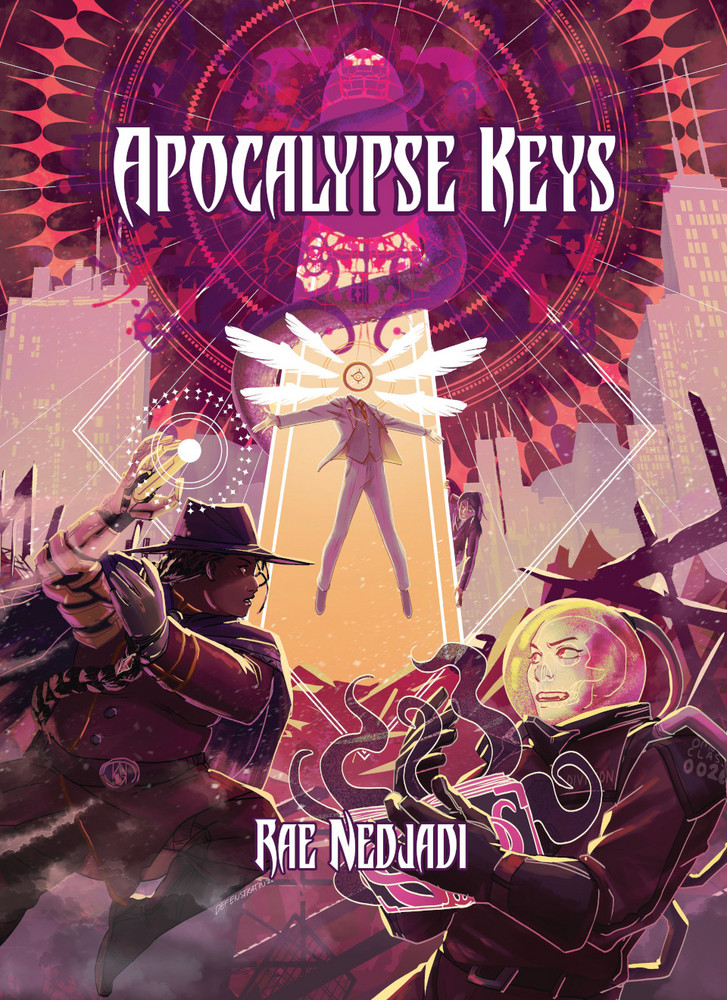
I’m fascinated by Rae Nedjadi’s designs, but Apocalypse Keys is the only one I’ve played. It’s basically Hellboy: the game, except there’s nothing “basically” about it. I look at it as a maximialist hymn to every PBTA game which he fell in love with in his journey in the form. Postmodern mystery stuff? Sure. Monsterhearts emotional hot mess? Great! Mask-y superhero emotion stuff? Oh yes. Blades-y base building? Yeah, why not. A bunch of cool mechanics he constructed for own amusement – most memorably, “roll too high and your powers go out of control”? There’s a great game here. There may even be three. It’s a lot, which is why I’ve never got it to table as a Keeper, but when I’ve played it, it’s left its claws deep, because it offers incredible places to make your own. In one I was a cosmic horror Tinkabel and in the other, I was the character who I used as inspiration for The Power Fantasy’s the Signal. It’s the only game in this list which led to an idea which so charmed me, I decided to use it in my day job. It knows how to ask the right questions.
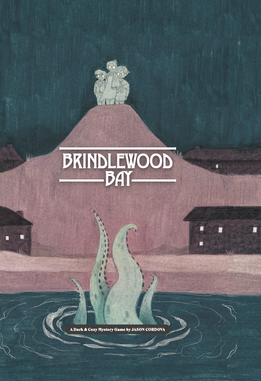
Murder-She-Wrote-meets-Lovecraft is the sort of high-concept which the Internet will always reward. However, its real fire is a testbed for the Gauntlet’s take on what I like to call The Postmodern Mystery. Gather clues. Assemble into a theory. Roll to see if it’s true. When I first read that, it felt actively heretical in its blasphemous rejection of objective reality, with all the inherent thrill there. A game that eventually becomes about hunting cultists makes you a monstrous cultist yourself. A joy.
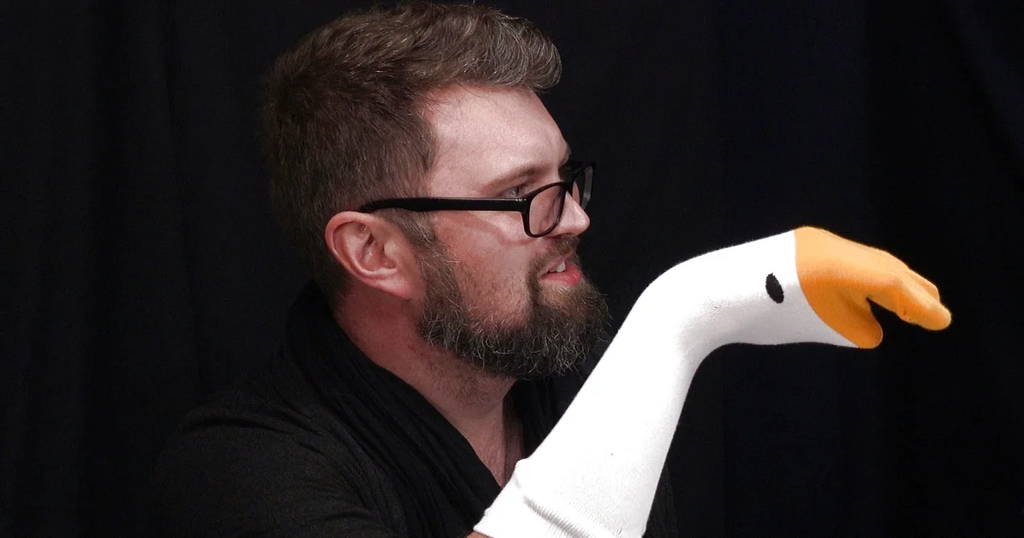
One of my favourite of Grant’s one pagers*, with you all playing inverted Doctor Doolittles, trapped in a zoo, and trying to escape. Unfortunately, any animal can give you orders, which you have no choice but to obey. A sort of comedy horror stealth game. I broadly think that Comedy in games is best engendered by creating a situation which escalates into ludicrousness. This, with you hiding behind a bench in hope that the monkey doesn’t see you, and derail you from the donkey who wants you go go and steal carrots is very much has that.
*Co-written with Nate Crowley, in this case.
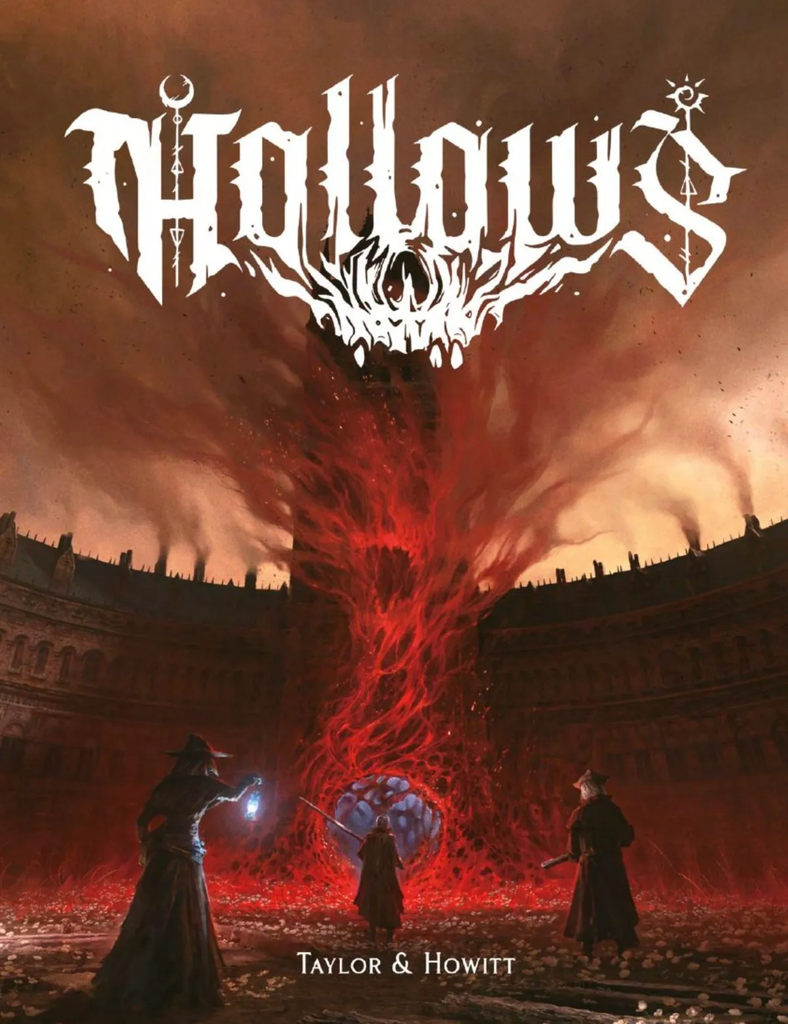
Rowan Rook & Decard’s contribution to the “you know – Dungeons and Dragons 4th edition had some good ideas” wave. The short campaign of this I played on the Open Hearth, with determined story gamers, had something of the thrill of forbidden fruit about it. Yes, we have this patina of victorian-hell-atmosphere, and “if you die, you become the next dungeon” horror stuff, and all those big ideas, but there was a moment when we all went… man, this tactical combat thing is all right, innit?
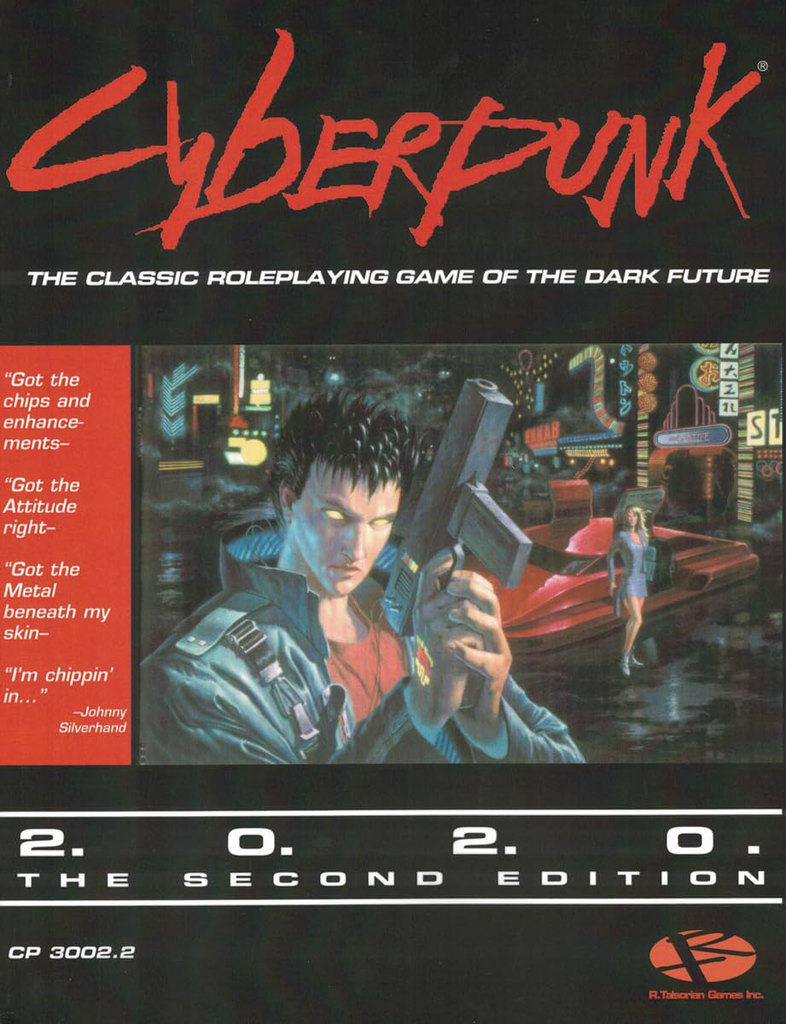
In an appropriately cyberpunkian move, the 2nd edition of Cyberpunk and arrived making the previous model obsolete. I’ve previously said that Cyberpunk felt like my first indie game. Cyberpunk 2020 felt like that going mainstream, plating itself in chrome. Comparing the cover at says a lot. I never fell in love with Vampire, but Cyberpunk scratched the similar itch, of transgressive and adult in a way that’s catnip for the not-quite-adult. I loved Cyberpunk. I bought blue light bulbs, wore mirrorshades and manually copied its logo in Deluxe Paint on my Amiga.
At the time, I also loved the austerity of concept. It’s Cyberpunk. That’s it. Fuck those who need to cut their street drugs with elves. Give me a real thing. While I myself was very into creating my own genre fuckery (see below), I viewed it being sold us in games as (to use a modern phrase) slop. It was also relatively quick to exist – Neuromancer in 1984 and a published TTRPG in 1988? Mike Pondsmith was on it in a way I find entirely admirable – serving up a syringe of cyberpunk before it had collapsed into a retro pastiche of tropes.
There is an argument that favourite games have to be replayable, something you return to. It’s untrue, in the same way that a romance that lasted a summer carries worth. Sometimes it is only for a moment, and you can never go back (and don’t want to). That’s Cyberpunk 2020.
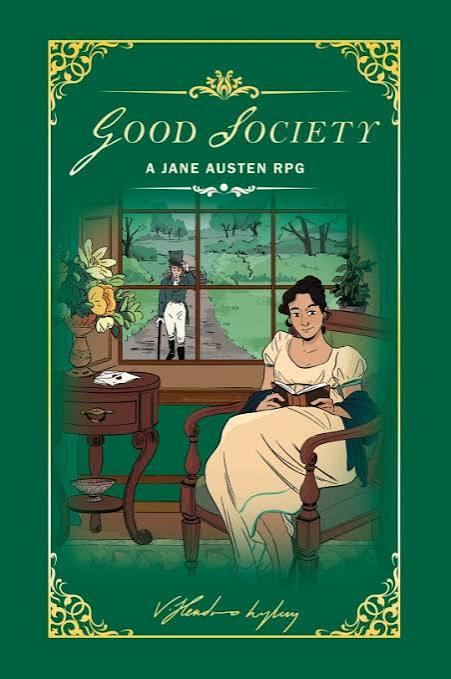
I’ve already used a “It is a truth universally acknowledged” gag. I guess I can go for a “Reader! I bought literally everything in the first edition!”, even though that’s Chazzy B. I haven’t backed the currently crowdfunding 2nd edition of this GMless Regency Romance-’em-up, as I haven’t got it to table enough, alas, with a single online game to my score. Which was great – and a game which very much demonstrates how play is important in evaluation. Reading this, I couldn’t have guessed that the letter-writing epistolary stage was a primary driver of the fiction. Also interesting in how its token-passing structure is designed to fall away when one doesn’t need it any more – analysed as a problem by some, and clearly intent by those who get the note behind the note. Also, when I introduced my character with the line “Small and round, she moves through the crowd like a musketball” I was aware it was probably the among the best single things I’ve ever said around the table. I mean, I’m quoting it now, right?
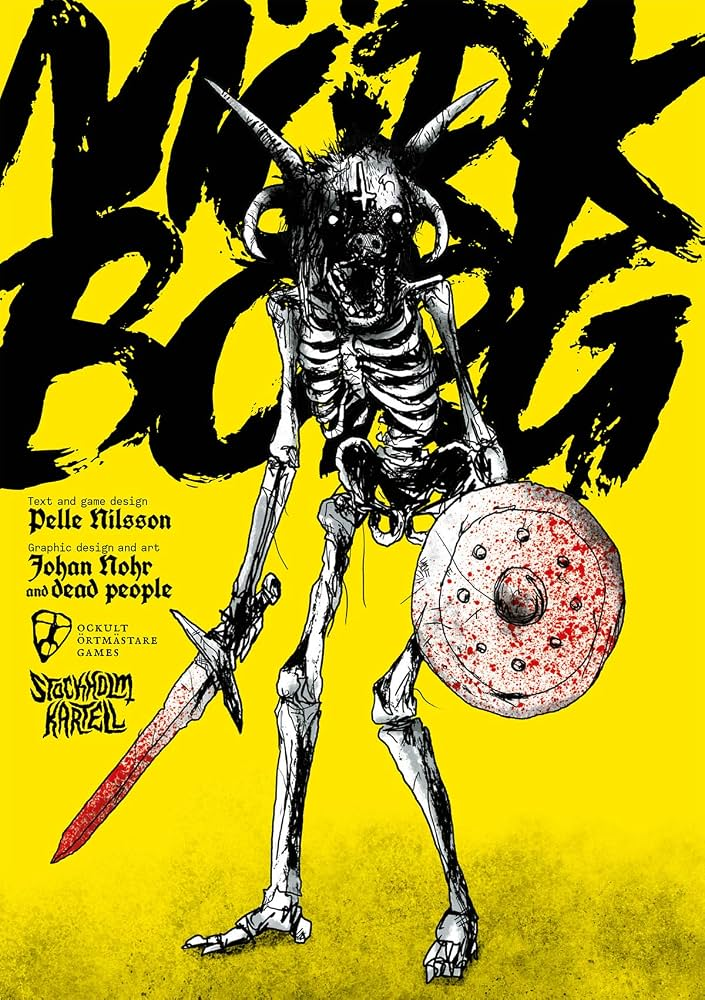
When I mentioned this was in the next section to a couple of friends, they were surprised. I guess I was too, which marks this as the point in the list where we move from “Man! I can’t believe I’ve put this so low” to “Man! I can’t believe I’ve put this so high.” In a real way, the rules light OSR of Mork Borg is typically the sort of thing which makes me drop bon mots like “rules that get out of my way can get out of my way.” So what’s going on?
Thinking about Mork Borg just makes me smile. I am delighted in a game that just rejected a bunch of commonly accepted wisdom and making it sing. Rulebooks should be readable and easy to parse? Fuck that for a game of grimdark helldimensional soldiers. Let’s create something that a mere glance at will either have you all in or brimming with hatred. With its transfigured mathclass horrordoodle-vibe, I’m in this corner. It’s telling this is the one of the few RPGs on this list which was bought for me rather than bought for myself.
But the bit which gets it this high is really how you can sit down with friends, and ten minutes later, you’ve got a selection of ‘orrible little people, at least one of whom has a grudge against corvids in all their forms. You can normally tell by then whether this will work for a given group – and the groups its worked with have been just some of my fave times with friends. ‘Orrible little people making ‘orrible little people having a ‘orribly good time.
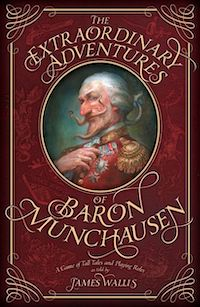
32) The Extraordinary Adventures of Baron Munchausen
Classic storygame of bullshitting nobles. I said I liked the swagger of Alas Vegas earlier. This stretches 4-or-so pages of rules into over hundred pages of gleeful nonsense (which, of course, is also an extended tonal example of the sort of things you should be doing in play.) It’s loveable and funny as the people you play with. C & I once used the final round of this to tell two friends that we were getting married, as it felt as marriage between us joyously ludicrous as everything else we cooked up. I told you this was games-as-autobio, and Baron Munchausen is part of that romance as much as naming all the tables at our wedding after 40k Primarchs. Yes, I know, fucking nerd.
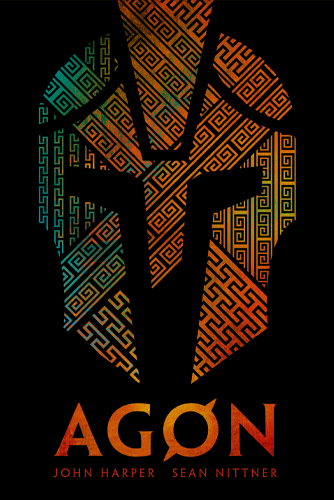
The 2nd edition of Harpner/Nittner’s Oddessy-em-up. Jim wrote about it here, and it provoked our group shouting WHO IS BEST!? a bit more than is strictly speaking healthy. As evidenced by my own hack, I’m fascinated by the Paragon system – probably as “competitive-and-collaborative games, about the tension between the two” are something I’ve noodled with even before I got into indie TTRPGs properly. I’m writing this, and I’m still unsure where I’m sticking this. It’ll be a last minute cut and paste, which seems appropriate for a game which loves being intensely, dramatically swingy. Let’s see where the dice fall.
I suspect it’d have been higher when I compiled the 101 list of games, rather than after I played Deathmatch Island, which tightens and heightens aspects of the game. Which isn’t really fair, right? Agon managed to create a real mythic epic, with poetry and grandeur.
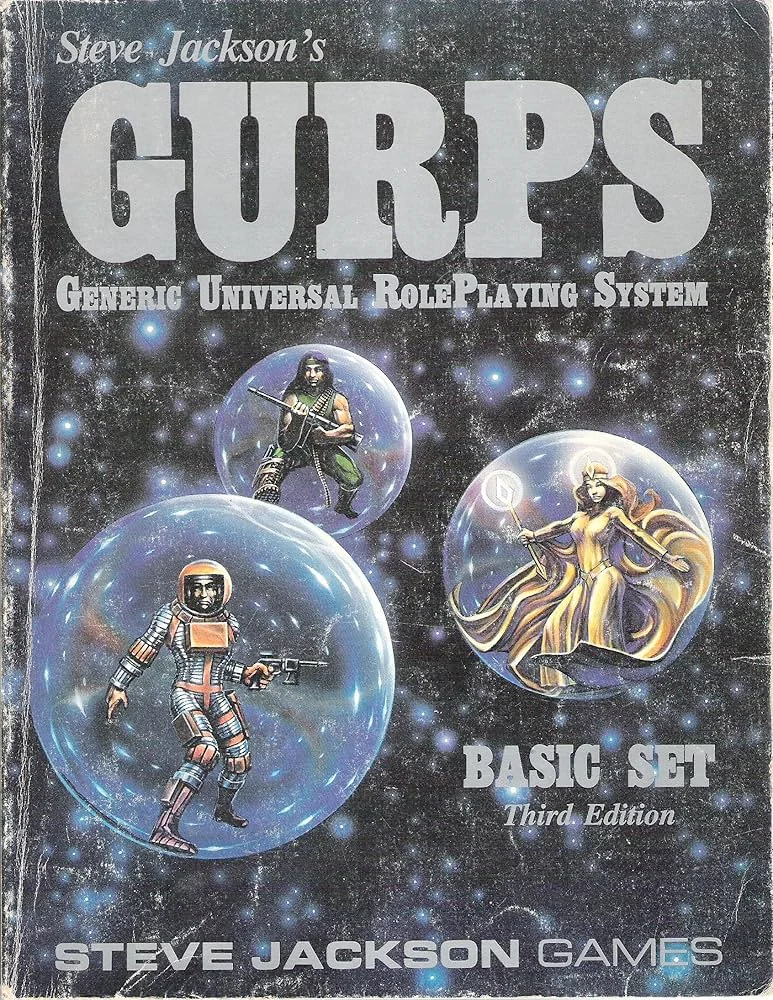
30) Generic Universal Role Playing
Oh yeah, we’re in GURPS town. Get out your calculator, and see if it makes sense to spend 5 points on becoming a slightly better shot if you decide you have no sense of taste or smell. And 10 points for being impulsive? I’m a teenager. I’d do that for free.
For a couple of years, GURPS was my go-to system. It wasn’t even a couple of years I wasn’t able to go to pubs and drink with people I had friends! Friends I talked into playing GURPS with me. I had to do some talking-into to even play it. I remember trying to explain to my mum why I had to buy another game – because if I had GURPS, I could play any game with it, and I’d never have to buy another game again. Sorry, mum, turns out that was a lie.
I was chatting to Thomas Manuel last week about Blades in the Dark, and one of the things he brought up was the idea that one definition of Trad is that it’s a game where the GM has to also be the game designer. GURPs was the apex of that for me – I was (and am) interested in genre mash stuff, and with all the different world books, I could build my own thing from parts. The game I remember most was the one played one long summer holiday – which was basically you-have-superpowers-but-a-year-to-live Strikeforce Morituri set in Independence Day (except the Aliens have already won and patrol the earth with orbital satelites) but also the Commitments, somehow? They spent an entire session getting speakers for a club so they could play a gig. GURPS’ promise was true, in many ways – you could play anything, but you’d have to design it first.
However, most crucially, GURPS was the start of me explicitly understanding that things I found intellectually appealing wasn’t actually what I was interested in. In GURPS, I would actively use almost every single rule I could find when building my worlds… and then, in play, I just dropped them all, falling back to the core (actually pretty elegant) basic system. There’s an irony here – the heaviest system that I regularly played was the system which started (and also facilitated) my journey away from trad.
This would be 10 places higher if it was true that Steve Jackson based all the “average” stats and abilities on his own ability to run 100m and similar. That’s apex collision of autobiographical game design and simulationism. Sadly, he got other people to do it. Boo!
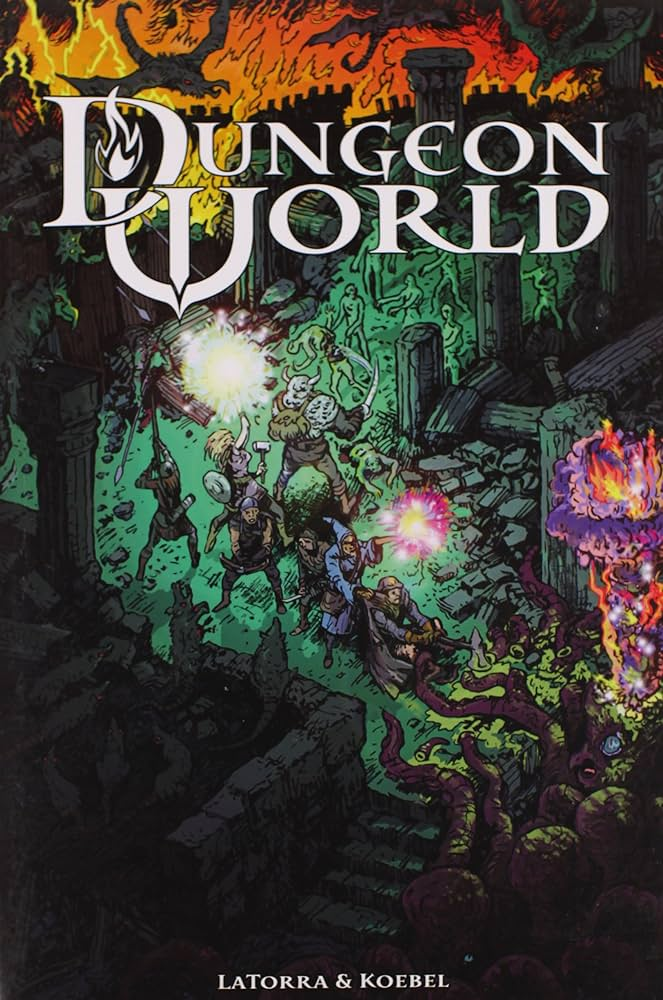
29) Dungeon World
Yeah, you heard. Its star has fallen, not least due to the actions of its co-creator, but also due to (er) it being a first wave PBTA game, and arguably (as in, folks will argue) it’s responsible for trends in PBTA some folks don’t like. Look at me, trying to be fair.
I have fond feelings for Dungeon World, because in that period when Actual Play had made the unforgivable sin of actually making people interested in TTRPGs, folks regularly asked me to to run one offs- or short seasons of RPGs. My Wife’s clever poetry friends were the classic example. A bunch of folks in the London artistic deminonde were curious, and wanted to try D&D.
Note the specific desire.
I would never run D&D for them, because I don’t hate myself that much (at least not in that way). However, I also hear what they are asking. They are not asking me to be a good ambassador for the art form, and make them play a game of princess pooble and her intense feelings about rain and flowers. They want to play D&D.
Basically, much of what’s wrong with Dungeon World is what makes it exactly right. Fighters rolling D8s. Druids who turn into bears. Levelling up and getting stronger .Magic fucking missile. Hit points. The only real big lack is D20’s iconic 1 and 20, and surely someone must have transferred the 2d6 probability curve onto 1-20 by now.
Basically, all the tropiest of trope-y tropes, in a game I could bear to play, and ended up knowing well enough that I could run with no warning at all. Dungeon World gave a lot of people around my tables a taste of what they wanted, and a taste of a more freewheeling play style. I think that’s neat.
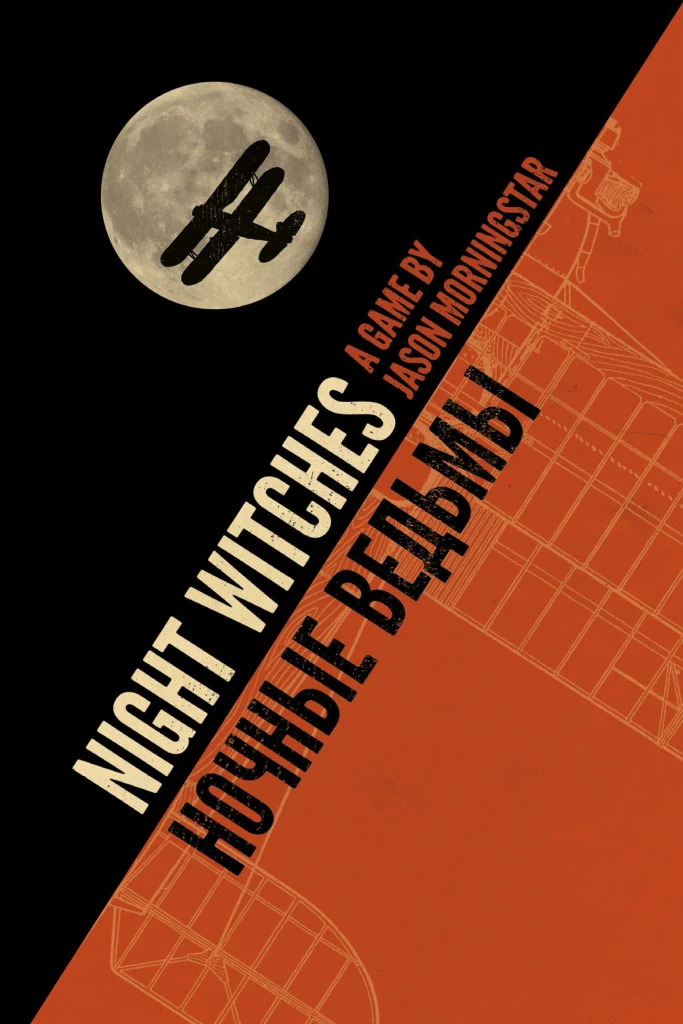
This is the apex of the difference between “how good I think a game is” and “how poor a time I had with a game.” This could have been in the 80s, easily. Instead, it’s ended here – because it’s clearly an amazing game. It not working has left bad memories, but not passed onto the game itself. I’d like to play this properly.
It’s Jason Morningstar’s game about the eponymous Night Witches, the WW2-era all-women bomber teams, who went on night missions in out-of-date biplanes. It cycles between the daytime of the witches (a horrorshow they have to survive) and the actual missions at night (another horrorshow they have to survive). They have a bad time, basically, and try and find humanity and community within this experience. It’s a deeply adult game.
The Group ran it, and – frankly – we bit off more than we could chew. We even tried to rotate GMs, as suggested. If the game was a biplane, you can imagine it limping and wobbling through the sky, swooping perilously close to the floor, bumping a couple of times, and maybe lifting again. All the group’s internal tension in play style and experience were in there, jamming its engines. My own weakness was jumping on a spikier role and never stopping to properly delineate to the group who she was – I know they thought of her as a naive child, rather than someone who had 2 years of hell in and had a literal deathwish. Yet again, experience gap. I’d have made it clearer now – and it was a game where me knowing the period better than anyone else definitely didn’t help.
While there were absolutely moments – the tension is throughout, the atmosphere carries great – it was broadly going poorly, and ends particularly poorly for me. The second session wraps and we’re coming back from the mission. I’ve actually landed the plane, after a somewhat miraculously lucky bombing run. Another plane comes in, and a 6- turns up. Hard move from the GM. What goes wrong with this landing?
A player suggests that maybe my character is crossing the runway and gets hit at full speed by the landing plane. Big yelp of excitement over the idea. GM turns to me, and asks me if it’s cool. I say “Sure!”
Of course, what I mean is “No. Absolutely not. This is throwing all my emotional work with this character under the bus for what amounts to a sight gag. Please, let’s not do this.”
This is a grown-up game. It was safety tooled to fuck. X-card is there. I was even checked in on. But in the moment, no, I absolutely wasn’t able to go against the inertia of the table and say that I would find it upsetting. So it happened, everyone laughed, and I was silently upset for days.
It’s clear to everyone Night Witches wasn’t working, so it should be our last session. I took succour in that – like, yeah, it’s not working, but onwards. Except later it was decided it would be our last session, full stop. The group wasn’t working for many of the games we wanted to play. I didn’t argue, as it was clearly true. I played with the players in different games, in different contexts. But that was it for the most influential gaming group of my life, the one whose finger prints, for better or worse, are all over DIE RPG. It ending with feeling (both in and out of game) as if I’d been thrown under a moving plane wasn’t ideal.
But it wasn’t working. I knew it. I know it was, in part, my fault. I knew that if I wanted to play these games, I had to find groups where it would work, and be a better player to handle it. I finally joined online communities, looking to be in a place where I would be the least experienced player in the room. The next time I meet a Night Witch, I wanted to be ready.
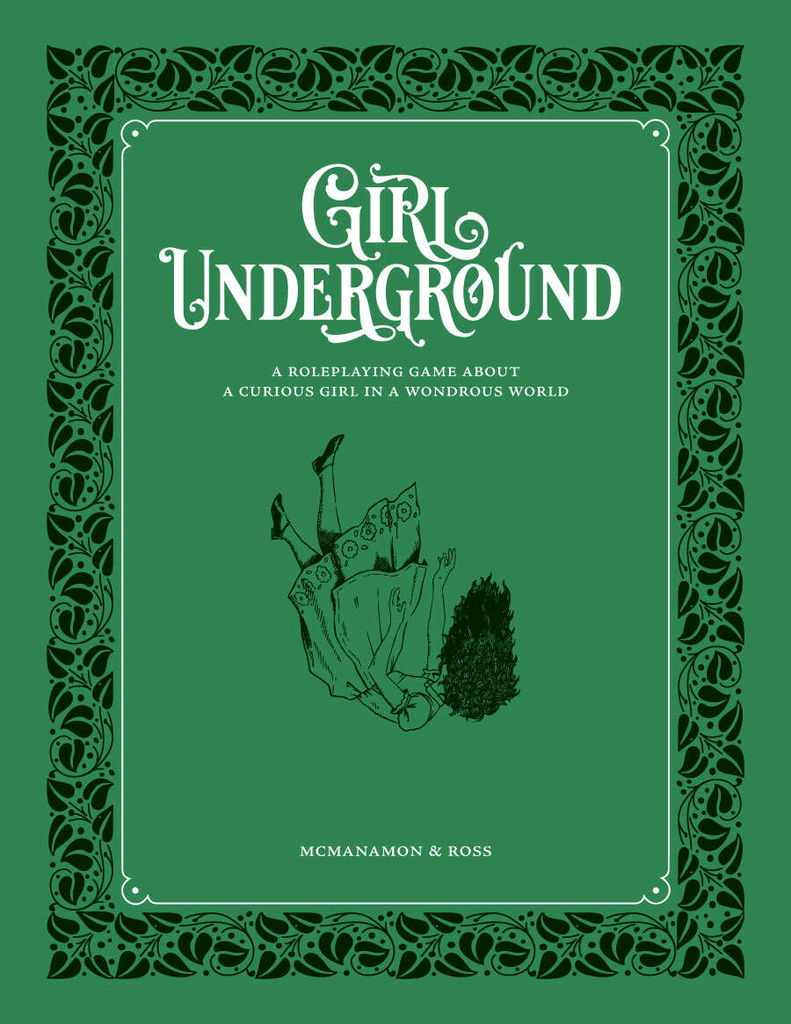
When I wrote about Girl Underground, I mainly wrote about something I didn’t like but when writing this list my heart positively vibrated at its name. Because, really, this led to some amazing play, and is a design I think of all the time. An Wizard-of-oz’em-up, with you all playing The “Girl” and plus each having sole control of one of her companions. The playbooks give such strong, iconic guidance to roleplaying and rewards it in play lead to some instantly powerful, primal, joy-inducing stuff, and the core game – a girl overcoming the lessons she has been taught and gaining beliefs of her own – is just beautiful. I also played a Yeti who was raised as a hobbit. Any game where I write sentences like that is always going to be a winner. As I said, I think I’d have preferred it if the Girl wasn’t rotating, but it’s a game which taught me a lot. It’s one that absolutely has influenced my own game design work.
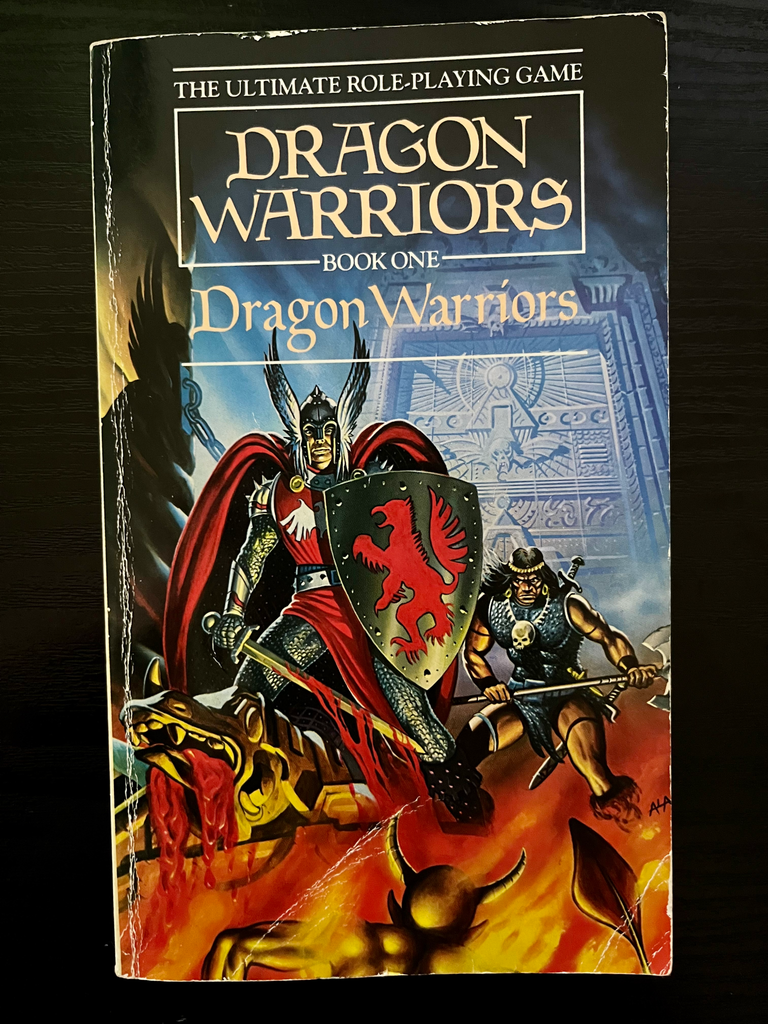
Another of the UK paperback format TTRPGs, and I suspect Dragon Warriors takes the place that the D&D monster manuals do in other strands of geeks. It’s in the fourth volume’s bestiary I got the vast amount of my random bits of folklore – and much of its Folklore is telling. It is very much a British folklore game at its core. The first scenario in the game has the distinct Athurian theme, and is also smart enough to realise “show the players a dragon” in the first dungeon in a game called “Dragon Warriors” is clearly a good idea. Make it magical.
Unusually, I’ve come back to this a few times as an adult, mainly to run the adventures which came with it (and occasionally even in Dragon Warriors). The quirks of it appeal – it’s the only core adventure game I can think of where a character’s armour is simply the most important thing in a fight. Knights (most PCs are) have a base armour of five. Any attack has to roll a number higher to get through – and things like claws just have D6. Swords and stuff are D8. You’re indestructible! Until you’re not, as blows when they get through hurt. The slow attrition of most trad simply isn’t there. That’s interesting, right? Especially to drop in a game for kids in the 1980s.
It’s memorable for another reason. It’s the only game I ever played with my Dad. I ran it for him and my brother for a session. We reached the end and, a football dad who was ever patient with the misfortune of begetting a pair of phenomenally nerdy kids, pauses and said thoughtfully…
“I can see why you like it, son.”
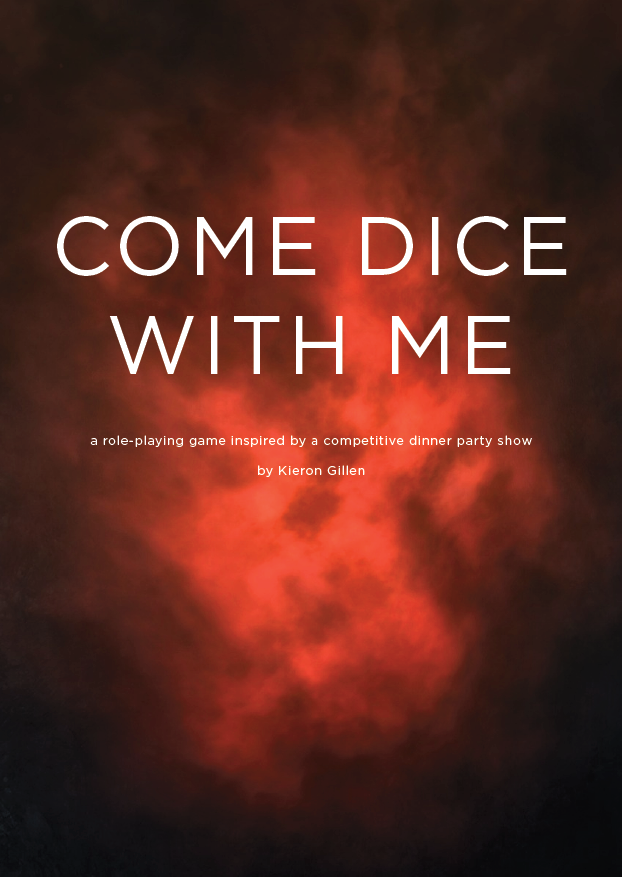
During the covid lockdowns, C and I watched a toxic amount of british competitive dinner party show, Come Dine With Me. After about a year, I saw the matrix, and realised I could mechanise the whole thing. Comedy disaster game Come Dice With Me is it. Once I ran this for a group including Maz RRD, and afterwards they said “I suspect this is the best thing you’ve ever designed.” I fear it is, Maz! I fear it still is!
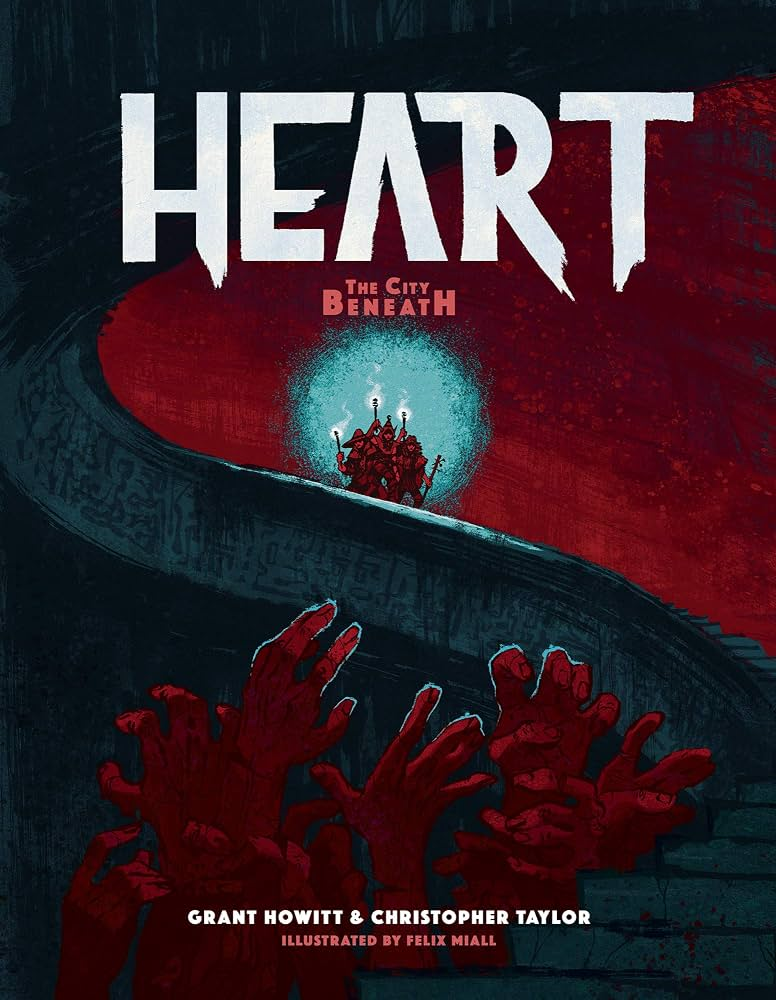
One day I’ll get around to writing an article about how Heart made me running and/or winging an actual play of Heart worryingly easy. Until now, take this as a strong recommendation – Heart is interesting in that it exists in a place between storygame and trad. I’ve never spoke to Grant or Chris about this, but my feel like I feel about DIE – it was designed to be as trad a game as they could ever bear to play. It lets you do all your adventurery stuff, but also makes it weird and emotional and huge. Your final level up exploding your character in different ways! Advancements being triggered essentially by the Wishes (from Stars & Wishes) of the previous session! Use of dungeon to externalise player’s horror (another thing which connects it with DIE in my head)! People made from Bees! Bees, I tell you. I heart Heart.
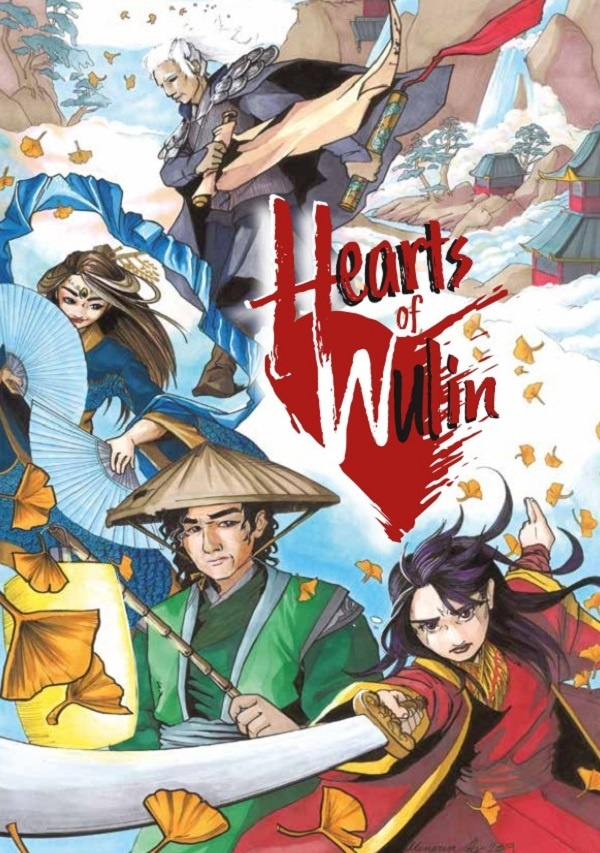
This is one of the highest “I only played a couple of sessions, and it left such a strong impression” games. This Wuxia PBTA has a murderer’s row of great genre-provoking moves. At first glance it’s the more complicated ones which caught my eye, the simple “Inner Conflict” is actually the knock-out blow. Whenever someone is feeling conflicted, you roll, and chances are, you run off in a melodramatic mess. If you have feelings, leave the room where you have feelings. I empathise. I actually only played this in a hack, where it was transferred to a Cobra Kai setting. I had signed up for a Scott Pilgrim one, but I had to drop out. It’s flexible for all of that. I want to go back, but then I get emotions, and have to leave the room, again.

I spent a week playing this GM-Full(!) Jonathan-Strange-and-Dr-Norrel Wizard-of-Earthsea Sandman-Amber- ‘em up. And wrote about it. And then wrote about it again. It lives in my head, so suspect I’ll write about it again. You know me, with my words.
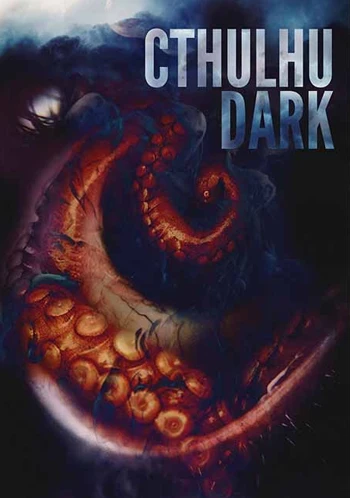
There was this period when I picked up a bunch of Trail of Cthulhu stuff, thinking I was going to run some of the excellent mystery material herein. Then, within the week, I picked up Cthulhu Dark, which made me realise “Anything I would run in Trail, I would likely enjoy more playing in this.” So I never have got any of the Trail material to table. This is cut to the bone investigative game, bringing what I like about Trail (primarily, the writing, the you-always-get-clues insight) and doing it in two pages of perfectly honed rules. Also, as a manual, has four great scenarios which find a way to make classic Lovecraftian horror be grounded an underclass-looking-up-at-their-predators rather than the traditional opposite. While I never do it in my own work, I love elegance, and this is as elegant as a blade sliding into a sacrifice’s heart, as pure as a worshipful howl to an uncaring god beyond time and space.
Next Time: The top 20. Or maybe just 20-11, and I’ll do the Top 10 separately, or even break it down further into smaller posts in the top 10. I’ll work it out.

Kieron Gillen lives in Bath, for a certain value of the word “lives”.