
It’s been a while. Also, I realised I can’t count at all. I think I’m at 102 now, except I think it’s 101. I’ve been reduced to literally counting the whole list manually, as for some reason, I’m not sure what I’ve done with this excel document. Expect my error to become clear in the top 10, when I put in two number fours and hope no-one notices.
I’ve also put a deadline on this. It started on my 50th birthday. It has to end on my 51st. The idea of it going on forever is fun in some ways, but even writing now has me dealing with being a different person than who composed that original list. Especially games which I’ve touched since. Does the game I played of something which didn’t work as well second time alter its position from the first time? Also, what on earth was I thinking with some of these? At least part of the reason of the delay was every time I looked at the working list I went “this is clearly all wrong.”
But I’m going to amble through. If we hit my birthday without the list being complete, I’m just going to post the remaining ones to get it out there. And now, with a self-applied stick, let’s see how my ADHD kicks in.
I’m also going to give my permission to write pithier. Will I take this permission? Of course not, you silly goose.
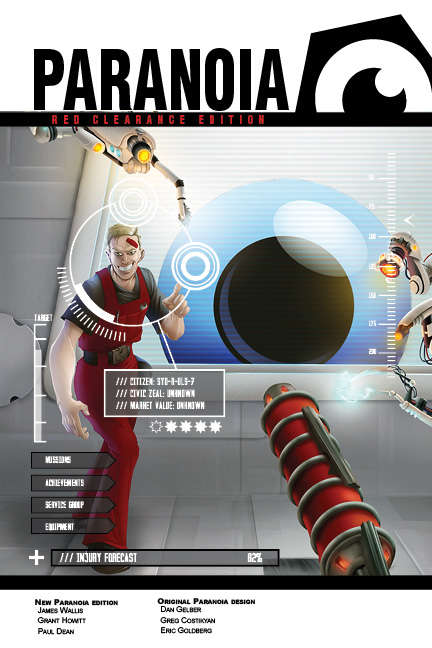
89) Paranoia Red Clearance Edition
If I had to impress my fifteen-year-old self with a single night from my life, it would be the night I first played Paranoia Red Clearance Edition. I was in a playtest for the new edition of one of my favourite RPGs, and when I was finished, I had to leave to get across town to see a Gerard Way solo gig from the VIP booth, where Way gave a shout out to Comics Royalty in attendance. 15 year old me would have fucking flipped.
(At least, he would when I’d explained My Chemical Romance, but 15-year old me would have been the easiest of easy sells for that. )
Sadly, it was downhill from there. I don’t really like Red Clearance Edition. It’s got the dual blows of not liking it in theory, and not liking what happened when it got to the table. If you were wondering whether or not this will be biased towards folks I like and know, this should be your answer. I’ve been friends with all three designers. In fact, now I think about it, being friends is likely a bad thing for your positioning on the list. Friends understand when I’m on my bullshit.
You do admire the bravery of the edition – it really takes it to pieces. And the pieces it re-assembles into are at least the core of the next edition, with the most experimental stuff stripped away. And, it remains Paranoia – a satirical game with a laspistol in both hands, one aimed at culture generally and the other at RPG culture specifically. You play troubleshooters (who shoot trouble) given missions from a malfunctioning computer – Orwell’s 1984 meets Williams’ Robotron: 2084. Players versus Player is common and comic, with each troubleshooter having six clones (effectively, lives). Accusations of treason fly, as do body parts.
You can even see why the choices seem interesting. The one which tripped most folks doesn’t bother me – replacing “Communists” as the games’ bogieman with “Terrorists”. You may get more fun iconography with Commies, but I get it. It’s the other stuff. Chargen involves for every good stat you have it forces another place to have the crap stat in the same area, which smartly builds animosity, but divorces me from the characters. It’s very card based, with a initiative system involving drawing cards to get actions and similar – which, in practise, divorced me from the actual narrative that emerged. The extra ideas distracted me from the flow. And – shallowly – I just didn’t like the production quality on the package.
That’s the thing with doing experimental work. Experiments are called experiments for a reason. Sometimes they’re what you did with test-tubes that year.
It’s also the first game on this list that was played properly with the group I teased last time – the group which was born in my development of DIE. I should introduce them, as they’ve got their own stories going on, which intersect with the stories we summoned at the table.
There was the person who worked as a games critic in another field, and wanted to explore what was around in indie RPGs. I’ll call him the Critic. There was the person who was a game designer in many other fields, but had no experience of RPGs, and wanted to change that. I’ll call her the Designer. There was the person who had been aware of RPGs for a long time, but had found them demystified by the joke versions played at the end of Harmontown episodes and wanted to know more. I’ll call her the Curious And there was the friend who knew RPGs, and seemed to come to the game with no ulterior motives at all, except to have a nice time. I’ll call him the Dilettante. The Critic, the Curious, the Designer, the Dilettante and Me.
We didn’t get on great with Paranoia Red Cleance. It was ambling along until the final encounter. We were playing the introductory scenarios – designed to slowly introduce the quirkiness of the setting. The end of the second one brings “Secret Societies”into the game, with each of the players being blackmailed to do something alongside what they should be doing, with a promise of a reward for doing so. This involved talking to each player individually, to give the side briefing. This is always a momentum killer. I did the briefings, and by the fourth player, I was aware that this was dragging on. As such, the last briefing was particularly short, and I should have realised that was a mistake. I had been playing with him for a while, and I should have known he was the one I would need to convince.
So, when we come back to play, he immediately reveals the blackmail information and refuses to go along with it. Two players jump on the rebellion. The fourth hides while all this goes down and completes his little secret mission, like a good, bad boy.
When the dust has settled, they go to the debrief – and, as this is Paranoia, the three people who went public with their blackmail get shot because they’re traitors to the computer. The remaining troubleshooter gets a birthday cake, a Best Troubleshooter badge and confetti filing the room. Congratulations, Troubleshooter! Mop up the traitors and wait for their clone replacements.
I was kicking myself. It was pure premise rejection. I figured, I could perhaps turn it around next session with the next clones, as the mission had Secret Society stuff at its core. At least now we’d established what the game is and what happens if you’re honest.
Except it’s suggested we move on, and I figured it may be better to cut to the chase. We’d given it a shot, and getting it working for the one more session likely wasn’t worth it. Let’s move on. What’s next?
What’s next was the last game the group played together.
I suspect that’s one reason why Red Clearance grates – no, I don’t love it… but it was also the last game I ran, and the last chance to influence the direction of that group, and I failed it, and us.
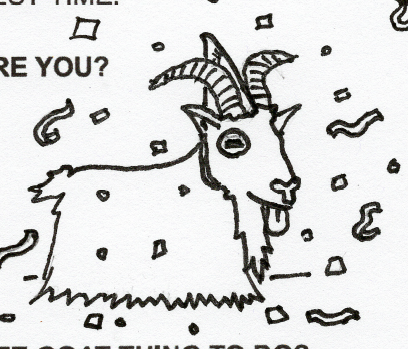
88) Goat Crashers
I’ve played quite a few of Grant’s one pagers. One of them has to be lowest. It’s the one with the goats trying to get into a party. In our game’s case, trying to get into the last Supper. The gospels didn’t mention that. I’m shocked it’s this low. What kind of goat-hating monster have I become? I can barely recognise myself.
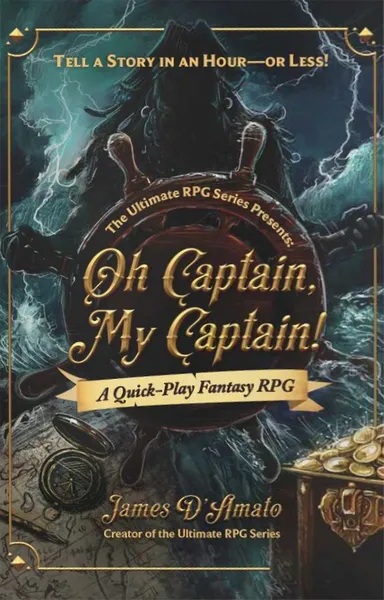
Descended From the Queen Game by James D’amato which has a lovely edition, and I’ve yet to get to table. It’s on the list as I played it once, on a panel, at a con, and my memory of the experience is mostly wiped due by the adrenaline of it. Also, odd chemistry between the group – I don’t think we quite clicked, as we were strangers. Perhaps more about descended from the queen games further in the list.
86) Unannounced Descended For The Queen Game
Oh, right, here’s another one. Alex Roberts of For The Queen fame popped into London, and we ended up doing a quick playtest of a new thing with some friends. The failure here is mostly mine – a conversation about something to do with one of my games had sent my brain spiraling, and about 50% of my consciousness was working on that project instead of paying attention. But despite being my failing, this is a list of my failings, and here we are. Yeah, perhaps really more about Descended From The Queen games much later, unless me never shutting up about For the Queen was just a bluff, and I’ve never actually played the thing.
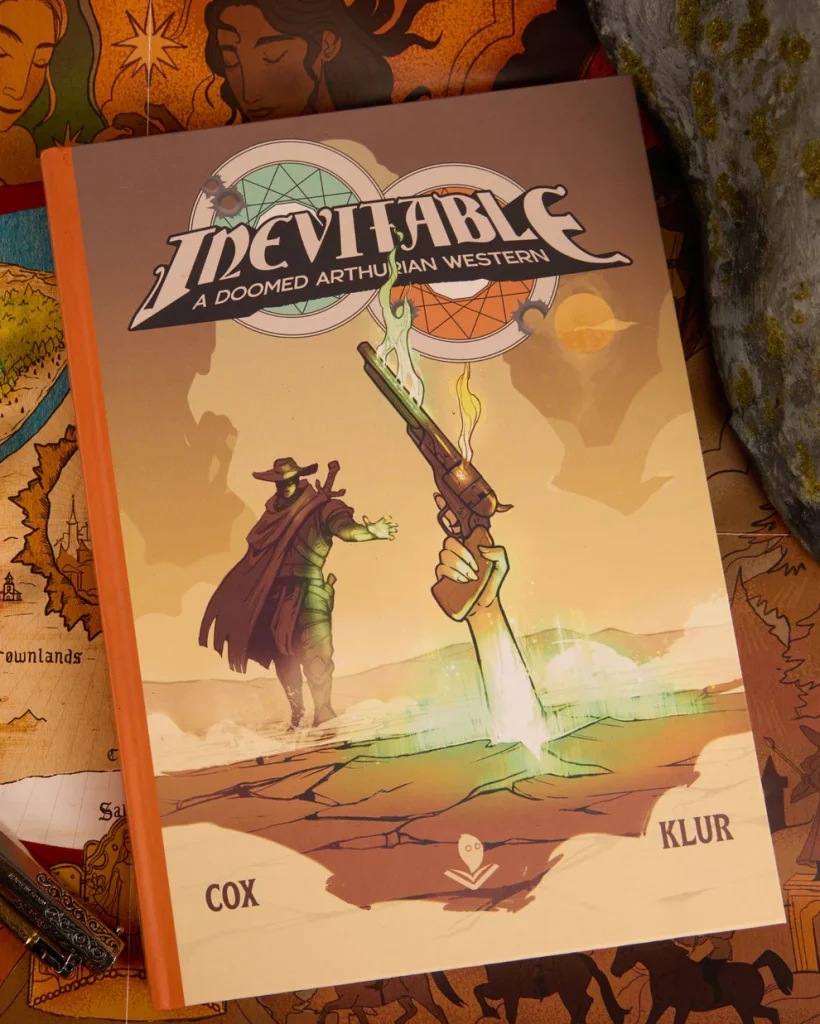
85) Inevitable
Despite the fact I regularly back Soulmuppet’s games, this is actually the only one I’ve managed to get to a table – and was just jumping in as a fill-in player in a game of Inevitable on Open Hearth. Following Soulmuppet’s “genre but sad” motif (exception Mad As Hell where it’s genre but BLOODY FURIOUS!), this is Sad Arthurian Cowboys who are very doomed. I presume they were. I was only in for a session, where I didn’t have a chance to even grasp for my six-shooter before drifting away, and so I only hold onto my time here softly.
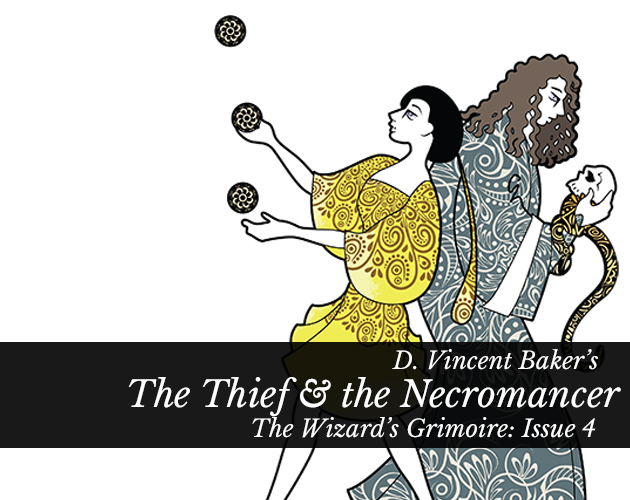
84) The Thief & The Necromancer
Or, as I like to call it, The Thief & the Necromancer & the GM & the Second GM.
We played this briefly in my regular group, prompted by The Mysterious Third (Chris) and with every word I write, the more I think I’m being hard to it by including it this low. This series of games from Vincent Baker, which play with the idea of the player/gm ratio is stuff I like to see, but this didn’t stick with me – I think that while I remember the shapes of our Fafhrd and the Gray Mouser-esque set up, I had forgot it’s a game where you have 2 GMs. Another one I’d like to go back to.

83) Thistle & Hearth
Another one from the early incarnation of our regular group, this is a Belonging Outside Belonging game set around a village, about their relationship with the fey forests around them. Belonging Outside Belonging is interesting – and I find it interesting for the challenge it poses me. It’s basically PBTA but stripped of the dice, replaced by a token economy. Moves which solve problems cost tokens. Moves which create problems gain a token. Go drama! In practise, I find it hard to play as the game tends to want – the concept of Idle Dreaming is core, and the sense of gentle touch. Conversely, to my writer brain, I want to play it in a much more driven fashion (because the up beat/down beat is RIGHT THERE). I know this is wrong… but I also know how the group was playing it was wrong in other ways, and my own frustration with us doing it poorly really leaked through. We ended up spending more time away from the village than in it, which was a clear failure. It’s a game about community, and we turned it into a dungeon crawl. Wrong group, wrong time, I suspect.
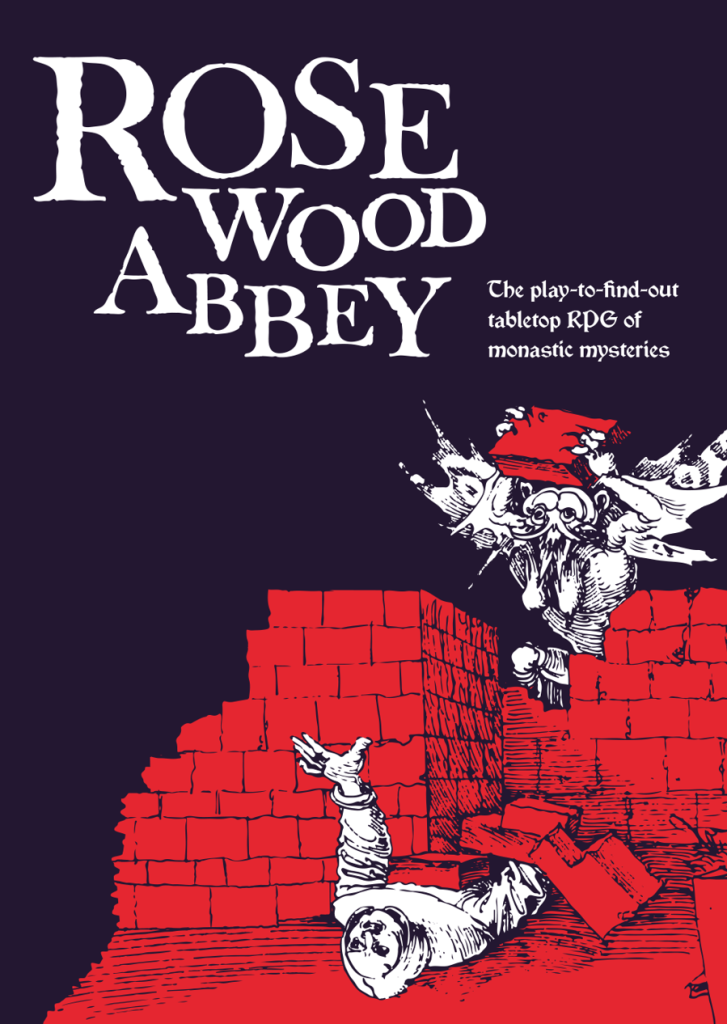
82) Rosewood Abbey
When I saw I had to write Rosewood Abbey, my brain went “wait – I thought I moved this higher!” Ah, here we are.
The reason being is, I like Rosewood Abbey a lot. It’s a Name Of The Rose ’em Up, with you playing monks trying to solve mysteries. It’s based on the Carved By Brindlewood system, and the early incarnation, so I basically mean “Brindlewood Bay”. I suspect we’ll talk in detail about postmodern mystery systems later, but this has one – the players assembling the solution from the clues presented. If Brindlewood Bay takes from Murder She Wrote, this takes from Cadfael – but does it straight. There’s no lovecraftian or other genre elements here – in fact, it expressly states that while characters have beliefs, there is no supernatural element to any mystery.
The reason why it was ever placed this low was it came from when I was assembling according “how much did you like the game you played?” was having a bigger influence than at other times. The game we did was a relatively early playtest, and on the Open Hearth – which led to the unusual situation where all three players had more experience with Brindlewood games than the designer did (who had come from a more trad background.) This is one of the interesting things about hacking a game – if the original design is rock solid and you don’t tweak the underlying assumptions, then the hack will at least work. And it did… but I found the experience frustrating, even though it really worked as a playtest. Also, the fiction ended up being fun. My retired killer who is now an incompetent beekeeper with a lot of queer romance subtext was lots of fun.
It’s also something you don’t need to take my word that it was a giggle too – the game is actually in the Rosewood Abbey manual, in the extended play transcript which takes up something like 2/3rds of the manual. Spooky.
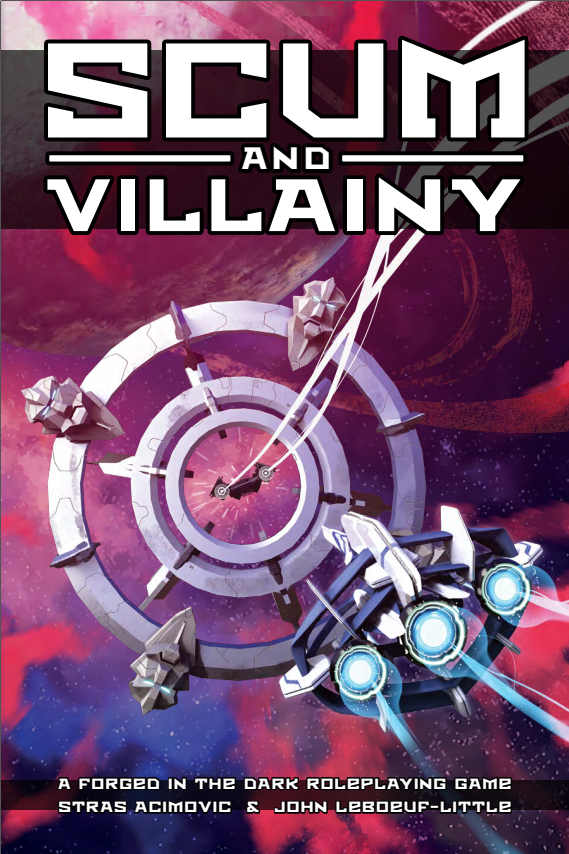
I was always a little down on Scum & Villainy – it felt a little under-engineered compared to the fiction/mechanic work that was all over Blades In the Dark. Plus there’s something about the title which feels off to me. I admire the Game of its choice, but dislike that we play it. I also haven’t played it straight. I played it where it was hacked to be merged with bits of Legacy: Life Beyond The Ruins and part of a possible-actual-play series with a really interesting high concept. The low placement is really born of frustration of that not playing out – it’s a rarity in that it’s a game where we came with big plans, and even the smallest ones never happened . Worse, I knew that was true from the very first session, and even then placed the game as “this is a chance to do a few games with people I dig!” in my head. But still, its potential nagged. I’d like to do that original idea, and never got to play.
If there’s a theme in this bit of the list it’s “Games that had something I was intrigued by, but never had a chance to experience, and it’s in my head, and perhaps we’ll return there one day.”
80) The Very Complicated Homebrew Game Made By My Friend James
Well, if there’s a theme. There isn’t.
This is a game I think of often, and has bounced up and down the list hugely as I’ve compiled it. It’s ended here, its lowest point. List making is difficult, cruel and capricious, and so was The Very Complicated Game Made By My Friend James.
James was the friend we shared a WTF! after the game of Rolemaster which opened this list, and started our own group, advertising and picking up folks. We did my first chance of a tasting menu kind of group, playing lots of things. Eventually, we played his Home Brew, which was (spoilers for those who didn’t read the title) Very Complicated. It had a whole world James had developed – which felt smart, detailed quasi-historical researched fantasy, but really it was about its rules and how they simply petrified us.
Specifically, it had a wargame inspired combat system which was based around playing cards, but the number and potency of cards you gained were determined by the strength of the character. It was also incredibly brutal. People die, lose limbs, everything.The problem being, none of us understood how it worked at all. We had no idea what was a good move or a bad move. We did anything to avoid combat, as creating characters was so much work that we had no desire to do it again, and we realised that entering a melee was basically like flipping a coin and seeing if we lived or died.
We mostly got through the (short) campaign by my character intimidating people – I had good combat skills, and was recognisably brutal… and as the combat WAS deadly, people were afraid of me. As long as I didn’t reveal I was afraid of the combat system, we got stuff done.
But this sticks with me. I’d played deadly systems before, but I never something which me feel about combat in the way I feel about it in the real world – confusing, awful and to be avoided at all cost. Now, even having played games like Trophy Dark where combat is an instant death, my benchmark remains the inscrutable uncertainty of The Very Complicated Homebrew Game Made By My Friend James.

Kieron Gillen lives in Bath, for a certain value of the word “lives”.